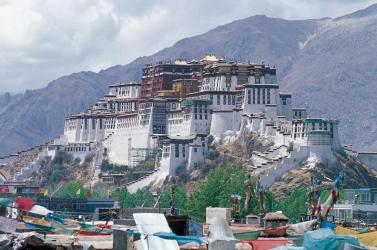
With its worldwide reputation, the Potala Palace stands on the Red Hill overlooking Lhasa in Southwest China's Tibet Autonomous Region. At an elevation of about 3,770 meter, the Potala Palace occupies an area of more than 360,000 square meters. Its 13-story main portion rises 115 meters high and covers an area of 130,000 square meters.
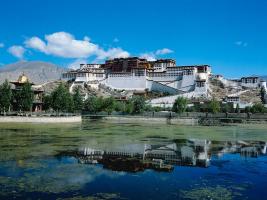
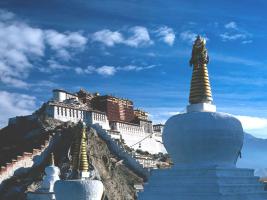
The whole complex, first built in the mid-7th century and consisting of halls, stupa-tomb halls (where the relics of the supreme lamas are preserved), shrines, prayer rooms, monks' dormitories, and courtyards, is recognized as the world's highest and largest castle palace. It was put under the State's protection in 1961 as a major national cultural site and listed as a UNESCO World Heritage Site in 1994.
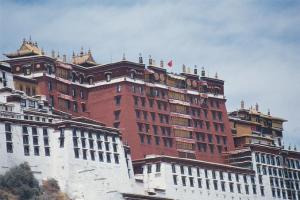
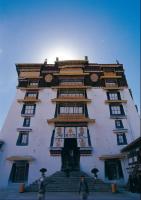
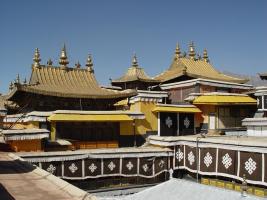
The name of the large sacred Buddhist building complex is a derivation from Samskrit Potalaka, which is the mythical mountain abode of Avalokitesvara, one of the Bodhisattvas. In this connection Lhasa is popularly referred to as Second Mount Potalaka.
The earliest construction of the Potala started in 631 under Tubo King Songtsan Gambo, which included 999 royal rooms plus a meditation chamber. The original Potala was destroyed in the 9th century, during the breakdown of the Tubo Kingdom (629-846).
The 5th Dalai Lama (1617-1682), in his effort to consolidate his theocracy, in 1645 entrusted his minister, with the rebuilding of the portion known as the White Palace of the Potala and also the enclosures, towers, and turrets. The extension was followed by new projects sponsored by later Dalai Lamas.
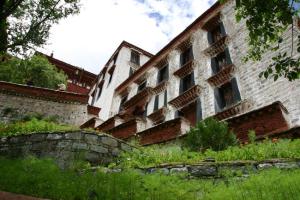
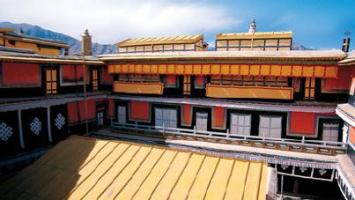
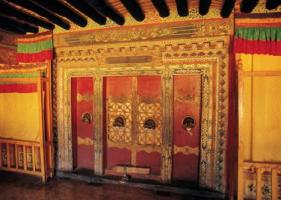
It became known as the "Winter Palace" by the 1750s, when the 7th Dalai Lama built the Norbu Lingka Park as his summer residence.
The Potala assumed its present form and scale in 1936 when the 13th Dalai Lama's (1870-1933) stupa-tomb was completed.